
Featured Projects
GBVRMI Institutionalization
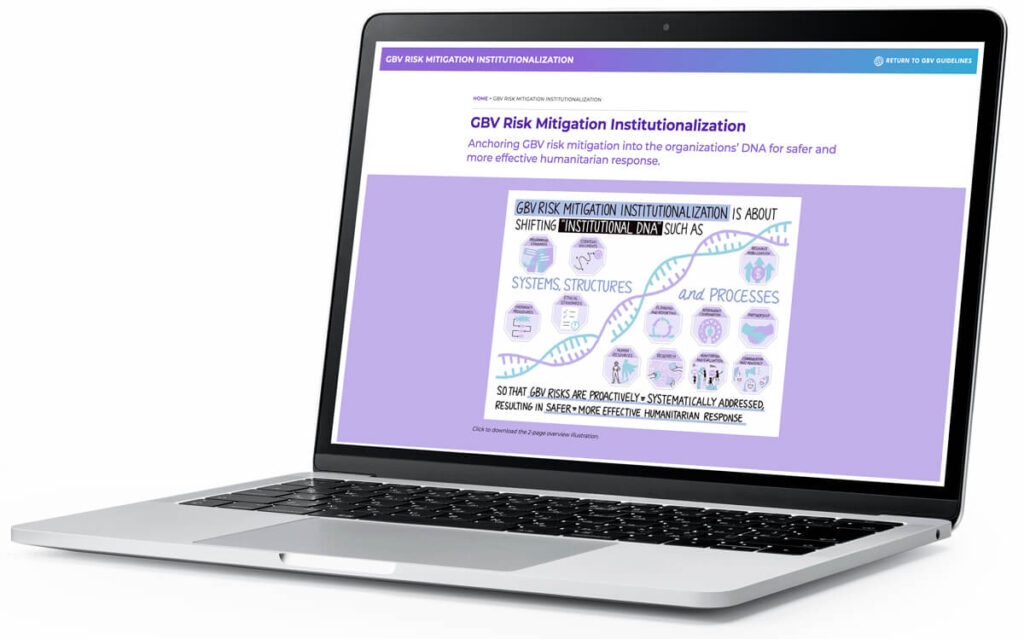
UNICEF commissioned Tsunagu in 2023 to co-develop a series of case studies, comprehensive resource package and an interactive website on the institutionalization of GBV risk mitigation into programming and coordination. This initiative was informed by interviews with practitioners and an extensive review of key documents from May 2023 to June 2024.
What is the Project About?
The project focuses on institutionalizing Gender-Based Violence (GBV) risk mitigation in humanitarian action. Instead of treating GBV risk mitigation as an optional or case-by-case effort, the project aims to embed it into the core structures, policies, and processes (“institutional DNA”) of humanitarian organizations. The result is a more consistent, self-sustaining, and predictable approach to preventing and addressing GBV risks across all humanitarian sectors.
Why is This Project Important?
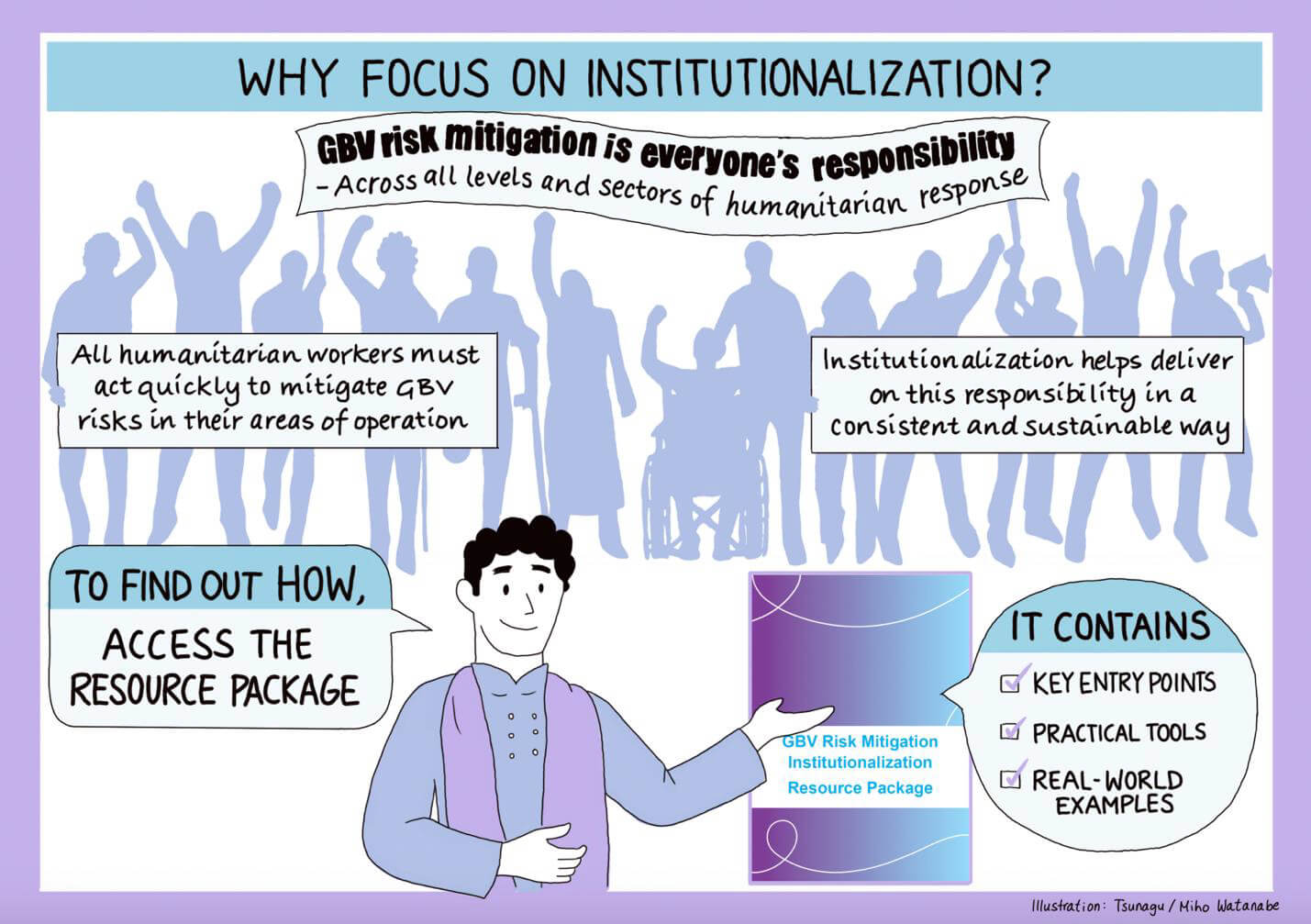
Since the 2015 launch of the revised IASC GBV Guidelines, the integration of GBV risk mitigation into humanitarian coordination and programming has expanded across sectors. However, to ensure sustainability and long-term impact, GBV risk mitigation must go beyond individual programs and be firmly embedded within the institutional systems, structures, and processes that guide humanitarian action. This includes planning processes, technical standards, and monitoring and evaluation systems, ensuring that GBV risk mitigation becomes a consistent and predictable component of humanitarian response rather than an isolated effort.
This is why, to ensure that GBV risk mitigation becomes a sustainable and integral part of humanitarian action, UNICEF and Tsunagu worked together to:
- Build a systematic evidence base on the institutionalization of GBV risk mitigation—what it is, why it matters, and how it can be effectively achieved in humanitarian systems.
- Document best practices and lessons learned on how GBV risk mitigation is integrated across different levels of humanitarian structures, processes, and coordination mechanisms.
- Develop a resource package with practical tools and guidance to help organizations embed GBV risk mitigation into their own systems, ensuring it is a core and enduring part of humanitarian programming.
Components of the project
- State of play
- Deep-dive case studies
- Thematic case studies
- Resource package
- Interactive website